
24/7 Emergency Line Open
Tankless Water Heater Service in Centennial: Install, Repair and Descaling
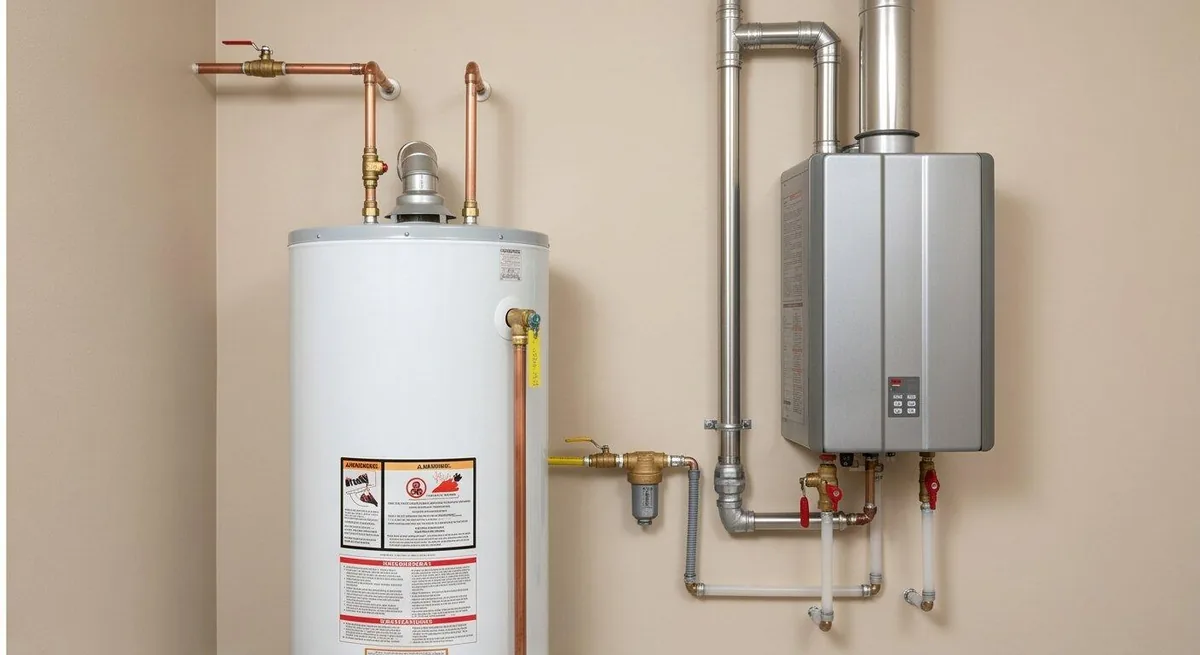
A tankless water heater heats water as it flows instead of storing it, which is why it takes less room and does not run out. It also has more parts that can foul or fault than a plain tank, and it is fussier about gas supply, venting and mineral buildup. Most calls fall into three groups: a new install or conversion, an error code or lukewarm water, and a unit that needs flushing.
- Licensed and insured plumbers
- Same-day service when available
- 24/7 emergency dispatch
Tankless repair: error codes, lukewarm water and no-heat calls
Most tankless problems announce themselves as an error code or as water that never gets quite hot. Both have a short list of usual causes, and a plumber works through them in order from the simplest to the one that needs parts.
A cold-water sandwich, where hot water turns cool for a few seconds before heating again, is common when a unit is asked for very low flow. It is not always a fault. A unit that cannot reach temperature at normal flow is a different matter and is worth a visit.
| Symptom | Usual cause | First check |
|---|---|---|
| Error code on the display | Ignition, flow or vent fault | Read the code against the model manual |
| Water stays lukewarm | Scale in the heat exchanger or a clogged inlet filter | Inspect the filter and test flow |
| No hot water at all | No gas, no power or a tripped safety | Check supply, breaker and shutoff valves |
| Cold burst between hot water | Very low flow or a failing sensor | Run a higher flow at the fixture |
| Clicking or no flame | Gas supply or igniter trouble | Confirm the gas valve is fully open |
Tankless installation: gas, venting and the new connections
A tankless unit is mounted on a wall, which frees floor space but changes what the plumbing and the vent have to do. Each model has a rated gas demand, and the pipe has to deliver it with the other gas appliances running. That is the step that most often turns a quick swap into a larger job.
Venting is the second check. Many units use a sealed vent that runs through a wall or roof, and the route, the clearances and the termination all have rules. The plumber sets that out before work starts, because it decides where the unit can go.
If a gas unit needs more capacity, the work involved is explained on the gas line page. An electric unit is a different path, with a large dedicated circuit rather than a vent.
Tankless unit showing an error or running cold? Call us
Say which code or symptom you see and whether the unit is gas or electric. A plumber serving your area is sent where one is available.
Flush, descale and maintenance: keeping the heat exchanger clear
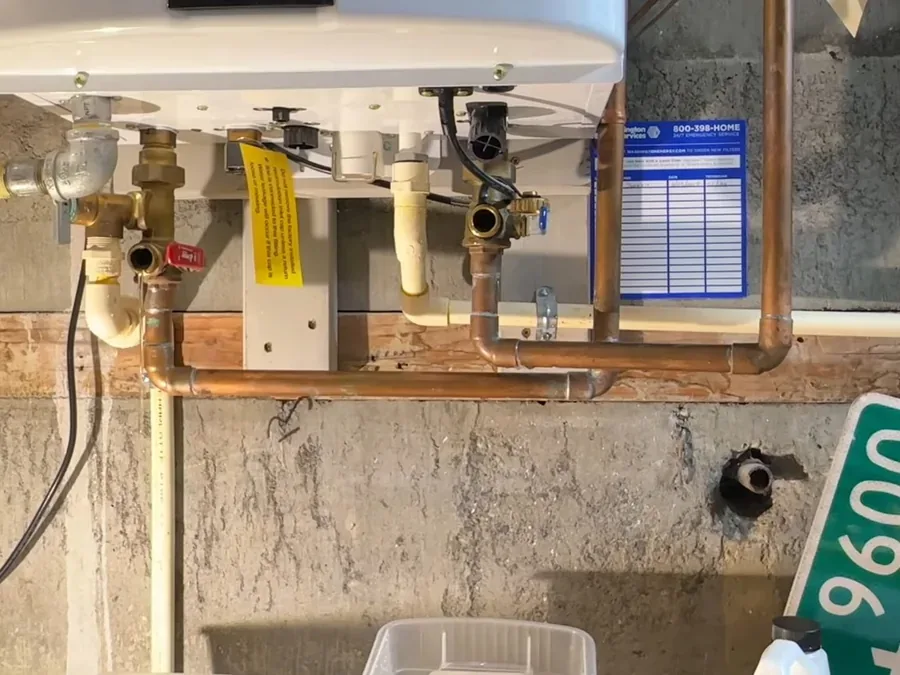
Minerals in water settle on the hot surfaces of a tankless heater and slowly narrow the passages. The result is lower flow, longer warm-up and error codes. Flushing circulates a descaling solution or clean water through the unit using the isolation valves, and most makers call for it at regular intervals.
Water from Denver Water sits in the soft-to-moderate range, and the number shifts by plant and season. Your address may be served by another district, so read your bill. Scale at that level builds gradually, which is why a yearly flush is usually enough, and a home with obviously hard water may need it more often.
- Shut off the gas or power and the cold-water supply to the unit.
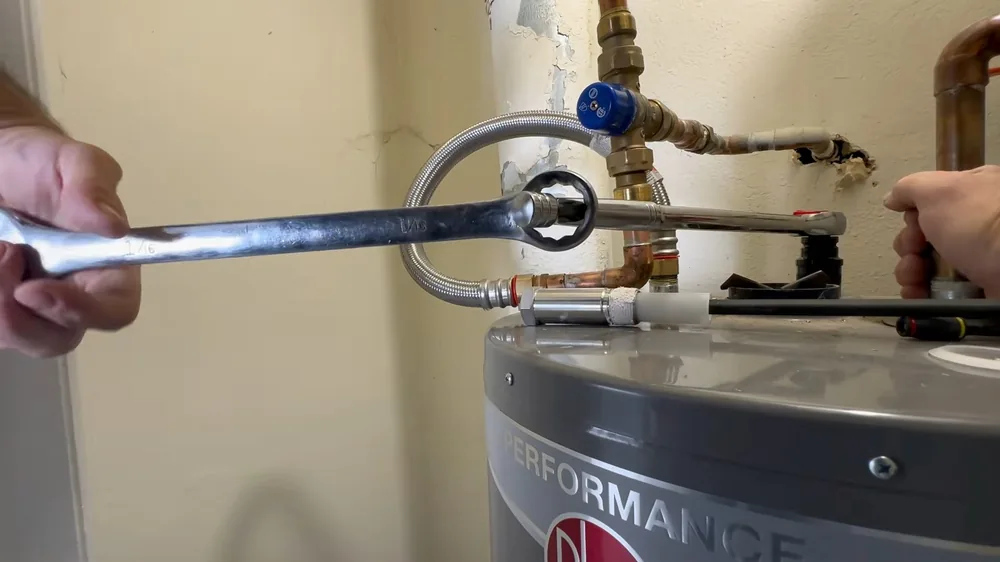
- Connect hoses to the service valves and run the descaling solution through the heat exchanger.
- Rinse with clean water, reopen the valves and check the inlet filter screen.
- Restore gas or power and confirm the unit fires and reaches the set temperature.
If flushing has to be repeated often, a water treatment device may be the right companion. The water softener and filtration page covers what it does for scale.
Replacing a tank with a tankless unit, and the other way around
Tankless vs tank is a decision, not a default. Reasons to switch include a failing tank, a wish for more room, or a bathroom remodel that opens the wall. Reasons to stay with a tank include a gas line that would need upgrading, a vent that cannot be routed, or a household that is happy with its current heater.
The tank option is described on the water heater replacement page. A plumber who works on both can compare them for your house rather than selling one.
Thinking of switching from a tank? Ask what your home needs
Describe the tank you have now and where it sits, and the dispatcher explains the next step.
Gas or electric, brands and servicing a unit you already have
Gas tankless units need a vent and a gas supply. Electric ones need a heavy circuit and, in larger homes, may need more than one unit. Which suits the house depends on what already runs to the location.
Plumbers service the major brands, and a unit installed years ago by someone else can usually be serviced without replacing it. Have the model and serial number ready, because they decide which parts and which procedure apply. Where a part is no longer made, the conversation turns to replacement.
A tankless gas unit that smells of gas, shows scorch marks near the vent, or trips a carbon monoxide alarm needs to be shut off at once. Leave the area, ventilate if you can do so safely, and call for help from outside.
Tankless water heater questions, answered
Can a tankless water heater replace my tank, and what changes?
Usually yes, but the swap is a project rather than a like-for-like trade. A gas tankless unit typically moves gas demand up, so the gas line, the vent and sometimes the condensate drain all need checking. An electric one needs a large circuit and may need a panel upgrade. A plumber should look at the gas line and the venting before promising a date.
What does a tankless install involve compared with a tank?
More connections and more checks. The plumber mounts the unit, runs a vent that suits that model, connects gas or power, sets isolation valves for later flushing, and verifies the water flow and temperature. The permit and inspection still apply. Ask whether the existing gas pipe can carry the new load before agreeing to a gas unit.
Tankless versus tank: which is the better choice?
A tank is simpler and usually the easier replacement where the plumbing is already in place. A tankless unit makes sense if space matters, if you want hot water without a wait for a storage tank to recover, or if you are redoing the room. Neither is right for every house. The tank-based options are covered on the water heater installation page.
Why does my tankless heater show an error code?
Codes point to a category: flame or ignition trouble, a sensor or flow fault, a venting restriction, or scale in the heat exchanger. Write the code down, note whether the unit is gas or electric, and check that the gas valve and any vent termination are clear. A plumber can read the code against the manual and decide whether it is a quick fix or a flush.
Tankless water heater problem in Centennial? Call the dispatch line
The line is answered 24/7. Give the brand, the code and what the water is doing, and the dispatcher checks what a plumber serving your area can do.
- Licensed and insured plumbers
- Same-day service when available
- 24/7 emergency dispatch